Answer: These five titles are among the top options for lovers of word play who want a substantial challenge, large-print ease, and a mix of difficulty levels. This guide helps buyers pick the right book for seniors, casual solvers, or puzzle enthusiasts seeking variety and quantity. Each selected title is suited to different preferences, from light daily practice to a hefty omnibus experience.
| Product | Best For | |
|---|---|---|
| Ultimate Crossword Puzzle Book For Adults and Seniors with 100 Puzzles | New solvers, seniors, daily readers | Straightforward 100 puzzles with large-print-friendly presentation. |
| The New York Times Ultimate Crossword Omnibus: 1,001 Puzzles | Heavy puzzle lovers, long-term fans | Extensive collection from a trusted brand, varied difficulty. |
| Ultimate Easy Crossword Puzzle Book For Adults and Seniors – 100 Puzzles | Beginner to moderate solvers, large-print needed | Relaxed pace with easy clues and large print. |
| Ultimate Medium Crossword Puzzle Book For Adults and Seniors – 100 Puzzles | Intermediate solvers seeking steady challenge | Balanced difficulty with engaging puzzles. |
| USA TODAY Crossword 2: 200 Puzzles | Casual daily readers, quick sessions | Compact bulk in a popular newspaper format, diverse clues. |
Below are five top picks arranged to help you compare formats, sizes, and puzzle counts. Each entry includes who it’s best for and a practical note to consider before buying.
Ultimate Crossword Puzzle Book For Adults and Seniors

Best for: casual daily solvers and seniors seeking straightforward challenges. The book presents 100 puzzles in a manageable format, with clear layouts that aid quick scanning and entry of answers. The author’s approach tends toward accessible clues and steady engagement, making it suitable for relaxed, regular practice.
Why chosen: It provides a solid entry point into crossword puzzles without overwhelming a new or returning solver. The stated format supports easy handling and consistent pacing across puzzles.
Caution: Limited to 100 puzzles; heavy users may want a larger omnibus for variety.
The New York Times Ultimate Crossword Omnibus: 1,001 Puzzles

Best for: puzzle enthusiasts who want a long-term challenge with brand continuity. This omnibus contains a broad mix of classic NYT clues and a wide range of topics, suitable for daily sessions over months.
Why chosen: The NYT brand is known for consistent clue quality and clever wordplay, offering a rich experience for experienced solvers seeking variety and depth.
Caution: The volume is substantial; not ideal for those who want quick, light sessions or a compact carry.
Ultimate Easy Crossword Puzzle Book For Adults and Seniors – 100 Puzzles

Best for: beginners and seniors who want a gentle introduction with large, clear print. This edition focuses on accessible clues and a readable layout to minimize eye strain during solving.
Why chosen: The large-print approach supports comfort and confidence, helping users build speed without frustration.
Caution: Easy difficulty means fewer new challenges for veterans seeking tougher grids.
Ultimate Medium Crossword Puzzle Book For Adults and Seniors – 100 Puzzles

Best for: solvers who want a balanced challenge without stepping up to hard difficulty. This edition offers a middle-ground experience with varied clue types and a comfortable pace.
Why chosen: It serves as a reliable bridge between easy and hard books, helping solvers diversify their practice and gradually increase difficulty.
Caution: May feel insufficiently challenging for seasoned cruciverbalists seeking advanced grids.
USA TODAY Crossword 2: 200 Puzzles
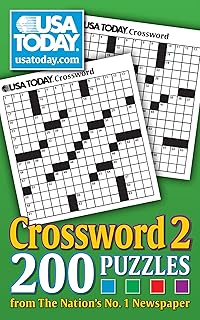
Best for: readers who want frequent, compact practice with a modern newspaper-style set of clues. This edition emphasizes a broad mix of fill-in-the-blank, wordplay, and themed puzzles across 200 entries.
Why chosen: The format is approachable for quick solving sessions and keeps variety high across many puzzles.
Caution: Availability may vary, and the digital sponsorship link indicates distribution channels beyond a single retailer.
Buying Guide: How to Choose the Right Crossword Puzzle Book
What puzzle count matters? Choose a higher count if you want a long-term project; a lower count is better for short sessions or travel. Consider whether you prefer a single-author collection or a diverse omnibus with puzzles from multiple editors.
Is large print important? For seniors or readers with visual strain, large-print editions reduce eye fatigue and improve accuracy. Check font size notes or sample page images when possible.
How much difficulty do you want? Beginners benefit from easy or medium grids, while seasoned solvers may seek challenging clues or a mix of themes and wordplay. Some books publish grids that escalate in difficulty.
Brand and source reliability: Established brands like The New York Times or USA Today provide consistent clue quality and familiar puzzle styles, which can shorten the learning curve for new solvers.
Format considerations: Paperback formats are portable and affordable. Consider whether you value edge-to-edge print, page layout, or a spiral binding for flat, comfortable solving in hand.
Portability and durability: If you plan to solve on the go, a lighter, compact book is preferable. For home use, a larger edition with more puzzles can be more engaging over time.
FAQ
- What’s the best buy for a first-time crossword solver? A 100-puzzle, large-print edition is typically easiest to start with and helps build confidence.
- Are omnibus editions worth the extra cost? If you want variety and long-term engagement, yes; they offer a broader range of clues and styles.
- What should I look for in puzzle difficulty? Look for explicit editor notes or a preface that describes the target skill level; some books present gradual difficulty progressions.
- Is it okay to mix brands? Yes; switching between brands can expose you to different clue-writing styles and themes, enriching the solving experience.
- Do these books work well for travel? Yes, paperback formats with ~100–200 puzzles are ideal for travel days and commuting.
- Should I choose a themed or non-themed book? Themed puzzles can be fun and cohesive, while non-themed editions offer a broader range of wordplay.