The best STEM books for preschoolers introduce science, technology, engineering, and math through age-appropriate stories, puzzles, or activities. ABCs of Engineering is best for first engineering vocabulary, Evan-Moor Smart Start STEM is suited to guided pre-K practice, and Pebbles and the Biggest Number offers a story-based introduction. The remaining picks focus on broad activity practice and picture puzzles. Compare the format and age range before choosing a book for home, preschool, or a gift.
| Book | Format | Best For |
|---|---|---|
| ABCs of Engineering | Board book | First engineering words |
| Evan-Moor Smart Start STEM | Paperback workbook | Pre-K activities across STEM subjects |
| The Ultimate STEM Activity Workbook | Paperback workbook | Ages 4–6 practice |
| Pebbles and the Biggest Number | Hardcover storybook | A story-led math and STEM introduction |
| Brain Games STEM – Get Ready for Preschool | Spiral-bound workbook | Picture puzzles for preschool readiness |
ABCs of Engineering

Best for: Preschoolers encountering engineering vocabulary for the first time. This Baby University board book presents first engineering words in an alphabet-themed format, making it a focused option for short, shared reading sessions. Authors Chris Ferrie and Dr. Sarah Kaiser bring a science-oriented perspective to the introductory topic.
Choose this book if you want a sturdy board-book format and a narrow focus on engineering terms rather than a workbook covering several STEM subjects. It can serve as a starting point for naming concepts and talking about how things are designed or built.
Limitation: Its subject is engineering vocabulary, so it is not the broadest choice for families seeking hands-on activities or coverage of all four STEM areas.
Evan-Moor Smart Start STEM Workbook

Best for: Pre-K learners who benefit from structured activities across science, technology, engineering, and math. The listed focus includes hands-on activities, problem solving, critical thinking, fine motor skills, sequencing, and animals. Its pre-K designation makes it a direct match for families or educators seeking age-targeted practice.
Choose this paperback workbook when you want multiple learning goals in one resource, rather than a book focused only on a story or a single STEM topic. The listed skills also make it relevant to adults looking for activities that combine early reasoning with fine-motor practice.
Limitation: This is a workbook, not a read-aloud story. Buyers looking primarily for narrative entertainment may prefer a picture book instead.
The Ultimate STEM Activity Workbook

Best for: Children ages 4–6 who are ready for a workbook introducing science, technology, engineering, and math. The title identifies both pre-K and kindergarten learners, so it may suit households looking for a resource spanning those early learning stages.
Choose this paperback if your priority is an activity-workbook format with all four STEM subjects named in the book’s scope. It is a more general option than Evan-Moor’s workbook, whose listed features call out specific skills such as sequencing and fine motor development.
Limitation: The supplied product details do not specify individual activities or how the content is divided by age. Review the listing to check whether its activity types fit the child’s current abilities.
Pebbles and the Biggest Number

Best for: Children who are more drawn to stories than workbook pages. This hardcover is described as a STEM adventure for ages 4–8, a range that includes preschoolers as well as older children. Its focus on a “biggest number” makes it a story-led pick for introducing number ideas within a broader STEM theme.
Choose this book if you want a narrative format to share together and a title that can remain relevant beyond preschool. It is also a useful contrast to activity books for children who engage more readily with characters and a story.
Limitation: The listed description does not detail hands-on exercises, so it may not meet the needs of buyers specifically seeking a workbook with activities to complete.
Brain Games STEM – Get Ready for Preschool
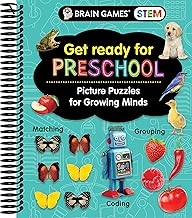
Best for: Preschool-bound children who enjoy visual challenges. The spiral-bound workbook is identified as a picture-puzzle book for growing minds, with a STEM and preschool-readiness focus. Its puzzle format offers a different approach from an alphabet board book or a story-based adventure.
Choose this option if picture puzzles are a better fit than extended reading for the child. The spiral-bound format distinguishes it from the paperback workbooks in this list.
Limitation: The product details do not name specific puzzle types or STEM topics, so check the listing if you want practice in a particular subject or skill.
Buying Guide: How To Choose A Preschool STEM Book
Does the child prefer stories, words, or activities?
Match the format to the child’s interests. Choose a board book for introductory vocabulary, a hardcover story for narrative reading, or a workbook for activity-based practice. Picture puzzles may suit children who prefer visual challenges. A format the child will engage with is often a more practical choice than selecting by subject label alone.
Which STEM skills should the book support?
For a focused introduction to engineering words, consider ABCs of Engineering. For a broader mix of STEM subjects and named skills such as sequencing or problem solving, compare the workbooks’ descriptions. If number ideas are the main interest, Pebbles and the Biggest Number is the story-led option in this selection.
How should age and format affect the choice?
Check the stated age or grade range against the child’s experience. The Ultimate STEM Activity Workbook lists ages 4–6, while Pebbles and the Biggest Number lists ages 4–8; Evan-Moor is labeled for pre-K. Formats also matter: board books are designed as books for young readers, while workbooks and puzzle books are intended for activity-style use.
Is a workbook right for independent use?
The supplied descriptions identify activities and puzzles but do not specify how much adult assistance is needed. Consider the child’s comfort with workbook tasks and whether an adult can participate. For shared reading without activity pages as the central feature, a board book or storybook may be a better fit.
Frequently Asked Questions
What is a good first STEM book for a preschooler?
ABCs of Engineering is a focused option for first engineering words. For broader subject coverage, compare the pre-K and ages 4–6 workbooks.
Which book is best for hands-on STEM activities?
Evan-Moor Smart Start STEM is explicitly described as including hands-on activities. The Ultimate STEM Activity Workbook is also presented as an activity workbook, though its listed details do not specify individual activities.
Which pick is best for a child who likes stories?
Pebbles and the Biggest Number is described as a STEM adventure and is the clearest story-led choice in this group.
Are these books suitable for kindergarten children?
The Ultimate STEM Activity Workbook lists pre-K and kindergarten in its title and gives an age range of 4–6. Check each book’s product listing for its stated audience.
What is the difference between a STEM workbook and a STEM storybook?
A workbook emphasizes activities, exercises, or puzzles, while a storybook centers on reading a narrative. Choose based on whether the child is more interested in completing tasks or following a story.