If you’re seeking proven phonics practice for second grade, these resources support decoding, spelling, and reading fluency for classroom or homeschool use. The top picks are well-suited for learners who need structured practice with blends, vowels, digraphs, and word patterns. This guide highlights five dependable options, explaining who each is best for and why. A quick comparison helps you choose the right fit for your child’s skill level and goals.
| Product | Ideal For | Why It Stands Out |
|---|---|---|
| Spectrum Phonics Grade 2 Workbook | Foundational phonics learners | Focuses on blends, consonants, vowels, and sentence writing in one bundle. |
| Spectrum Spelling Workbook Grade 2 | Spelling with phonics connections | State-standard aligned, strengthens spelling patterns and context-based rules. |
| Evan-Moor Daily Phonics, Grade 2 | Structured daily practice | Reproducible worksheets for consistent practice at home or school. |
| 180 Days Phonics Workbook for 2nd Grade | Daily, comprehensive practice | 180 days of skill-building with personalized learning elements. |
| Evan-Moor Building Spelling Skills Grade 2 | Spelling alongside reading/writing | Integrated spelling strategies for longer reading and writing tasks. |
Spectrum Phonics Grade 2 Workbook

The Spectrum Phonics Grade 2 Workbook targets second-grade phonics fundamentals. It emphasizes blends, consonants, vowel sounds, and basic word-building through sentence writing practice. Best for learners beginning to solidify decoding and phonics-based writing. This resource is well-suited for classroom tasks or homeschool routines that require structured, skill-focused exercises.
Who it’s best for: students who need clear, progressive phonics drills tied to reading and writing practice. Why selected: it integrates knowledge, phonics-focused exercises, and dictionary skills to reinforce word recognition and meaning.
Caution: contents are skill-focused; learners needing higher-level comprehension may require supplementary reading passages.
Spectrum Spelling Workbook Grade 2
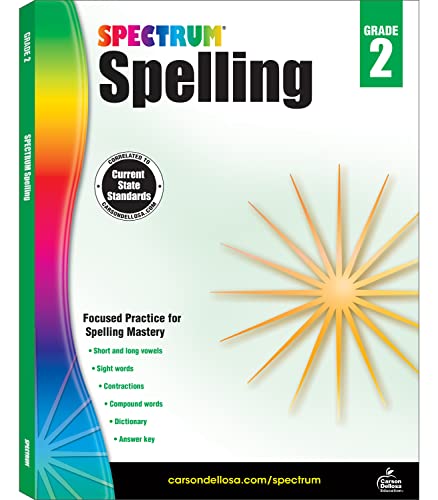
The Spectrum Spelling Workbook strengthens second-grade spelling through targeted practice in spelling patterns, rules, and meaning in context. It pairs well with phonic work to reinforce decoding and spelling connections. This book is ideal for students who benefit from explicit pattern-based instruction and frequent, short practice sessions.
Who it’s best for: learners who need steady, pattern-driven spelling progress. Why selected: aligned with current state standards and designed to reinforce spelling skills with meaning-focused tasks.
Caution: primarily spelling-focused; supplement with reading comprehension activities for broader literacy support.
Evan-Moor Daily Phonics, Grade 2

Evan-Moor Daily Phonics provides a homeschool- and classroom-friendly approach to phonemic awareness and decoding. With 208 pages and reproducible worksheets, it supports structured, daily practice. It’s suitable for learners who benefit from consistent routines and teacher-guided or independent work.
Who it’s best for: students needing steady daily practice to build decoding fluency. Why selected: comprehensive pages and reproducible formats support repeated use and differentiation.
Caution: some learners may require more reading passages alongside phonics drills to maintain engagement.
180 Days Phonics Workbook for 2nd Grade
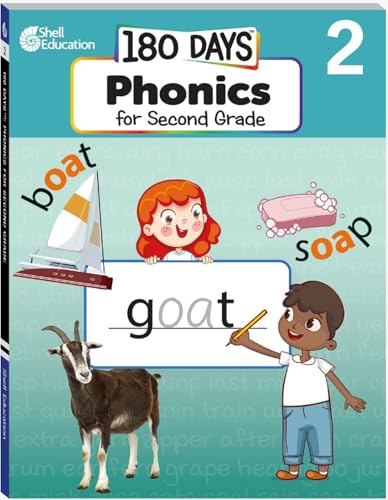
180 Days Phonics Workbook offers an extended practice program with a daily, diagnostic-friendly format. It emphasizes vowel teams, word patterns, digraphs, and decoding skills. This workbook is best for learners who progress through a structured year-long plan and benefit from regular assessment-style tasks.
Who it’s best for: students who thrive with routine, measurable daily work. Why selected: standards-aligned activities help ensure consistent skill growth over time.
Caution: may require additional practice in reading comprehension beyond phonics drills for balanced literacy development.
Evan-Moor Building Spelling Skills Grade 2

Evan-Moor Building Spelling Skills integrates spelling with reading and writing, offering reproducible worksheets and teaching editions. It supports learners who benefit from explicit spelling strategies embedded in longer language tasks. This resource helps connect spelling to broader literacy goals.
Who it’s best for: learners who need integrated spelling with writing and reading practice. Why selected: structured approach to spelling within the context of reading and writing tasks.
Caution: listed as “Used Book in Good Condition” in some listings; verify current edition and reproduction availability if you need new materials.
Buying Guide: Key Considerations For Choosing A Phonics Practice Book
- Scope and progression: Do you need a beginner-focused set or a full-year program with daily practice? Look for sequence and skill progression across blends, digraphs, vowels, and spelling patterns.
- Format and flexibility: Are worksheets, reproducible pages, or writing prompts preferred? Consider whether the resource supports classroom use, homeschooling, or both.
- Standards alignment: Check if the book aligns with state standards or common core patterns to ensure relevance to curriculum expectations.
- Integration with writing: For stronger literacy, choose materials that combine phonics with writing practice to reinforce word recognition and usage.
- Differentiation: Look for resources that offer varied difficulty levels, supports for English learners, and options for diagnostic assessment.
- Practicality: Consider page count, durability, and whether the activities are engaging yet concise to fit in a typical tutoring or classroom session.
Frequently Asked Questions
- What is the best phonics workbook for 2nd grade?
Answer: A workbook that aligns with second-grade standards, emphasizes blends, vowel patterns, and word-building, and includes writing practice is typically the best fit for this grade level. - Should I combine phonics with spelling practice?
Answer: Yes. Pairing phonics with spelling helps reinforce decoding skills and improves word recognition in writing contexts. - Are these books suitable for homeschool use?
Answer: Yes. Most of the featured titles are designed for classroom or homeschool environments and include reproducible pages for independent work. - How many pages should a good daily phonics program have?
Answer: Programs offering 100–208 pages provide enough material for several months of daily practice with room for review. - Is standards alignment important for choosing a phonics workbook?
Answer: Yes. Alignment helps ensure the material aligns with expected benchmarks and supports consistent skill development.