If you’re targeting the Pharmacy Technician Certification Exam (PTCE), the right study book can help you build a solid foundation, reinforce high‑yield topics, and practice test scenarios. This guide highlights five top study books to fit different learning styles—from comprehensive guides with practice tests to quick-reference laminated materials. Best for: new technicians seeking structured plans, visual learners, and those balancing study with work or school. The overview table below helps you compare core features at a glance.
| Product | Best For | Key Benefit | Format |
|---|---|---|---|
| PTCB Exam Prep: All‑in‑One Guide | Comprehensive prep | High‑yield review with 15 full tests | Paperback |
| Pharmacy Technician QuickStudy Laminated Guide | On‑the‑go reference | Concise, portable reference | Pamphlet |
| Top 200 Drugs Simplified: Coloring Book | Visual learners | Colorful memory aids for drug classes | Paperback |
| PTCB Exam Prep: 6‑Week Study Plan | Structured plan | 900 practice questions + strategies | Paperback |
| Barron’s PTCE Premium | Official‑style practice | 4 full practice tests + online support | Paperback |
PTCB Exam Prep: All-in-One Guide

Brand: Clinical Prep Academy (Author) • Format: Paperback
This comprehensive study book targets the full spectrum of PTCE content, combining a high‑yield review with 15 full‑length practice tests and answer explanations. Best for: exam‑focused learners who want extensive practice and clear rationales to reinforce correct decisions. Better for: those who benefit from test‑driven pacing and systematic review. Limitation: the large volume may be overwhelming for readers seeking a quick refresher.
Pharmacy Technician – PTCE QuickStudy Laminated Guide

Brand: Sarah Liu MA CPhT (Author) • Format: Pamphlet
This QuickStudy laminated reference serves as a compact reference for quick lookup during study sessions or internship shifts. Best for: learners who prefer a portable, at‑a‑glance format and frequent topic brushing. Better for: on‑the‑go review between lectures or work shifts. Caution: not a substitute for in‑depth practice tests or comprehensive topics.
Top 200 Drugs Simplified: Coloring Book & Study Guide

Brand: P. Burns, PharmD (Author) • Format: Paperback
This drug‑focused study aid uses coloring and memory aids to reinforce the 200 most important drugs. Best for: visual learners and students who benefit from mnemonic devices. Better for: reinforcing drug classes, indications, and common side effects. Caution: coloring pages supplement study but do not replace practice questions or clinical reasoning.
PTCB Exam Prep: 6‑Week Study Plan
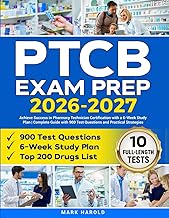
Brand: Mark Harold (Author) • Format: Paperback
This book outlines a 6‑week study plan designed to help learners pace review and maximize retention. Best for: those who want a structured timeline and practical strategies. Better for: students who need a disciplined routine. Limitation: study plan pacing may require adjustment for individuals with irregular schedules.
Barron’s PTCE Premium

Brand: Sacha Koborsi-Tadros PharmD (Author) • Format: Paperback
Includes 4 full practice tests and comprehensive review materials, plus online practice access. Best for: test‑takers who want official‑style practice and a mix of questions. Better for: those who value a traditional test‑prep approach. Caution: online components may require additional setup for access outside the classroom.
Buying Guide
What study format fits you best? Consider your learning style—visual, textual, or mixed—and whether you prefer a plan with built‑in practice tests or a portable quick reference. If you have limited time, pick a laminated guide for quick reviews and supplement with a few practice sets. For comprehensive coverage and exam‑like questions, choose a full guide with multiple practice tests.
Key considerations for PTCE study books
- Content breadth: Ensure the book covers pharmacology, prescribing guidelines, patient safety, and exam‑relevant laws.
- Practice material: Look for a high number of practice questions and clear explanations.
- Format and accessibility: Consider portability (laminated guides) vs. in‑depth discussion (paperback with chapters).
- Study plan: If you benefit from structure, a guided study plan can help maintain steady progress.
- Supplemental resources: Online practice tests, flashcards, and answer rationales increase retention.
How to use these books effectively
- Start with a diagnostic assessment to identify weak areas.
- Create a study schedule aligned with your PTCE date and daily commitments.
- Alternate between content review and practice questions to reinforce memory.
- Review explanations for every incorrect answer to understand the reasoning.
FAQ
- Q: Which book is best for beginners with little pharmacology background? A: The All‑in‑One Guide offers broad coverage and practice tests that help build foundational knowledge.
- Q: Do lamination laminated guides replace full practice tests? A: No, they are best for quick review; pair with a comprehensive practice set.
- Q: Is coloring‑based study effective for drug memorization? A: It can aid visual learners by reinforcing drug classes and mnemonics.
- Q: Should I follow a fixed study plan or adapt my own? A: A structured plan helps many learners, but adapt it to fit your schedule and retention pace.
- Q: How important are online resources? A: Online practice components can enhance familiarity with exam formats and pacing.
- Q: How soon should I start before the PTCE date? A: Begin with a diagnostic review and set a study timeline that fits your target test date.