Whether you’re advancing from late-beginner to early-intermediate, or helping an adult student expand technique and theory, Level 4 piano books provide essential structure. This guide highlights five solid choices that balance method, theory, and repertoire. Each entry explains who benefits most, why it’s a strong pick, and a practical limit to watch for.
Summary table of highlighted products:
| Product | Best For | Why It Stands Out | Limitations |
|---|---|---|---|
| Piano Adventures: Lesson Book, Level 4 (2nd Ed) — Faber | Students building technique and arpeggios | Balanced repertoire and technique, standard notation | Assumes some reading fluency |
| Alfred’s Basic Piano Library Lesson Book, Bk 4 | Foundations and note-reading drill | Clear step-by-step progression with rhythm and articulation | Older style layout |
| Piano Adventures: Theory Book – Level 4 | Theory-focused learners | Concise theory exercises tied to Level 4 concepts | Standalone theory—complements practice books |
| BigTime Piano: Popular Level 4 and Above | Teen/Adult players seeking recognizable tunes | Fun, contemporary repertoire for motivation | Primarily arrangement-based |
Piano Adventures: Lesson Book—Level 4, 2nd Edition

This intermediate method book from Faber Piano Adventures targets students transitioning to Level 4 complexity. It emphasizes arpeggios, chords, and scales within familiar song contexts. Best for students who learn by pattern practice and need clear notation to guide progress. The book’s structure supports independent practice and in-teaching sessions alike.
- 16 songs aligned with Level 4 concepts
- Arranged for piano with standard notation
- Designed to reinforce technique while expanding musical literacy
Who it’s best for: students who prefer a structured repertoire and direct technical goals. Why selected: it provides a coherent bridge to more advanced pieces while reinforcing essential patterns. Caution: may feel repetitive for players craving more stylistic variety within a single book.
Alfred’s Basic Piano Library Lesson Book, Bk 4
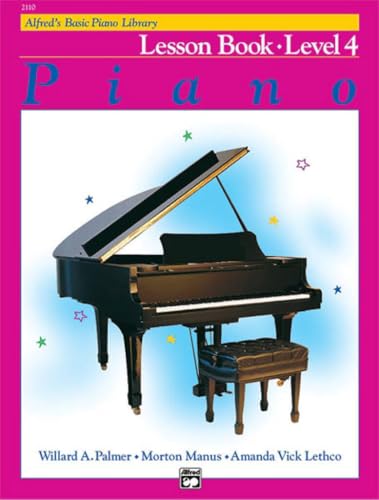
This Level 4 Alfred book continues a step-by-step approach that emphasizes correct playing habits and note reading. It includes complex rhythms such as eighth note triplets, two-part writing, sixteenth notes, and dotted rhythms, plus warm-ups. It’s well-suited for students who benefit from explicit technique drills and structured progression.
- Step-by-step method with emphasized habits
- Includes Eighth Note Triplets, Sixteenths, and more
- Two-part writing and warm-ups provided
Who it’s best for: teachers and learners who value a thorough, methodical path through level-4 material. Why selected: it covers a broad set of technical concepts in a clear sequence. Caution: some learners may crave modern layout and additional contemporary pieces.
Piano Adventures: Theory Book – Level 4

This theory book complements Level 4 practice by focusing on essential musical concepts at the same stage. It features 40 pages of activities that reinforce harmony, rhythm, and notation. It’s best for learners who need a separate theoretical framework to deepen understanding beyond playing notes.
- Theory-focused activities for Level 4
- Concise workbook format
- Pairs well with the corresponding lesson book for integrated progress
Who it’s best for: students who learn best through theory and pattern recognition. Why selected: it provides a dedicated space to develop musicianship skills that translate into better sight-reading and improvisation. Caution: standalone theory may be less engaging without practical piano pieces in the same volume.
BigTime Piano: Popular Level 4 and Above

This collection pairs popular songs with Level 4 technique, appealing to teens and adults who want current hits and familiar melodies. It’s a supplementary resource for rhythm practice, dynamics, and performance-ready pieces. Best for motivation and recital readiness through recognizable repertoire.
- Includes familiar songs and pop arrangements
- Designed for practice and recital use
- Better for continued engagement after formal exercises
Who it’s best for: players who prefer contemporary tunes and a fun, approachable repertoire. Why selected: it broadens musical taste while reinforcing Level 4 technical goals. Caution: arrangement-heavy pieces may not align with every student’s preferred classical or jazz focus.
Buying Guide
What should you consider when choosing Level 4 piano books?
- Learning goals: Do you want more technique, theory, or repertoire emphasis? Choose a mix that matches your needs.
- Reading vs. rhythm focus: If note-reading is a priority, select books with clear notation and warm-up exercises.
- Teacher vs. self-study: Some volumes are designed for guided lessons; others support independent practice with structured explanations.
- Repertoire style: Prefer classical-sounding pieces or contemporary pop tunes? Pick a book that aligns with your taste to stay motivated.
- Progression: Look for a sequence that reinforces earlier levels and safely introduces more complex rhythms and chords.
Recommended combinations: Pair a method book (for technique) with a theory or repertoire volume to build a well-rounded Level 4 toolkit. If motivation matters, add a pop/arrangement book to balance practice with familiar tunes.
FAQ
- What is Level 4 in piano method books? Level 4 typically marks the transition to more independent playing, with increased technique, reading, and more complex rhythms and chords.
- Should I buy multiple Level 4 titles at once? Yes, if you want a balanced approach to technique, theory, and repertoire. Pairing a theory or repertoire book with a method book is common.
- Is a theory book necessary at Level 4? Not strictly, but it helps deepen musical understanding and improves sight-reading and aural skills.
- Are these books suitable for adult learners? Yes. Several titles target adults and teens with accessible explanations and practical repertoire.
- Can these books be used with a teacher? They work well in teacher-guided lessons, but many students also study them effectively on their own with periodic check-ins.
- Do these titles include audio or online resources? Availability varies by edition; check each product page for accompanying resources.