The best learning resources for preschoolers offer simple ways to practice early skills through play and age-appropriate activities. The Learning Resources Mini ABC Pops are best for letter recognition and phonics; the color-sorting toy is suited to sorting and fine motor practice; and the Time Activity Set introduces analog clocks. For workbook-style learning, consider the Highlights Preschool Big Fun Workbook or the Scissor Skills Preschool Activity Book.
| Resource | Best For | Learning Focus |
|---|---|---|
| Learning Resources Mini ABC Pops | Early literacy play | Letters, sounds, matching |
| Color Sorting Sensory Toys | Hands-on sorting | Colors, counting, fine motor skills |
| Learning Resources Time Activity Set | Clock practice | Analog time concepts |
| Preschool Big Fun Workbook | Varied workbook activities | Pre-K math, writing, shapes, puzzles |
| Scissor Skills Preschool Activity Book | Cutting practice | Lines, shapes, coloring |
Learning Resources Mini ABC Pops

Best for: Preschoolers practicing letters and early phonics through tactile play. This set includes 26 alphabet toys with uppercase and lowercase letters, according to the product details.
Children can use the pieces for letter recognition, letter-sound practice, color matching, vocabulary activities, and alphabet matching games. Popping, matching, and sorting the pieces also gives children a chance to practice fine motor movements.
It is a strong choice when you want one resource that can support several early literacy activities rather than a workbook focused on a single task. The listed age range is 3–5. Limitation: This resource focuses on alphabet-related learning, so it does not provide the broad mix of subjects found in a preschool workbook.
Color Sorting Sensory Toys

Best for: Children who benefit from hands-on color, sorting, and fine motor activities. The product description says the toy supports color recognition and introduces sorting, counting, and sequencing through play.
Actions such as squeezing, pressing, and placing pieces provide tactile practice and involve hand-eye coordination. Repeating a sorting activity may also give children a calm, focused task. These features make it a useful option for play-based practice that does not rely on written worksheets.
Choose this if you want a sensory activity with several early-skill connections. Limitation: The listed learning focus is primarily colors, sorting, counting, and fine motor activity; it is not described as a resource for literacy or clock learning.
Learning Resources Time Activity Set

Best for: Children beginning to explore analog clocks, with adult guidance or independent practice. The set includes a realistic clock with movable hour and minute hands for hands-on exploration.
According to the product description, activities help students practice identifying hours and half-hours, along with additional time concepts. It is designed for classroom lessons, small groups, and guided instruction as well as independent use.
Choose this resource when telling time is the specific skill you want to introduce. Its movable hands let children connect clock parts with time practice instead of only seeing clock images on a page. Limitation: It is specialized for learning time and does not offer the range of subjects covered by a general preschool workbook.
Preschool Big Fun Workbook
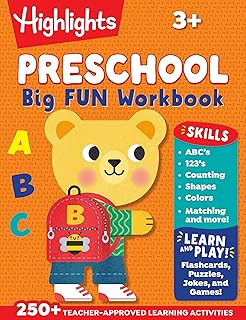
Best for: Families or educators looking for a broad selection of preschool practice activities in one book. The title describes more than 250 practice games and puzzles covering Pre-K math, writing, shapes, and other activities.
A varied workbook can make it easier to switch between topics without gathering multiple subject-specific resources. This book is a better fit for children who enjoy paper-based games and puzzles than for those who need a primarily tactile toy or a dedicated clock activity.
Choose it for variety across common preschool learning areas. Limitation: The available product details identify workbook topics and activity count, but do not specify individual exercises or the level of adult guidance needed.
Scissor Skills Preschool Activity Book

Best for: Preschoolers practicing early cutting and coloring activities. The title describes pages for cutting lines, shapes, fruits, and animals, and identifies the book as intended for children ages 3–5.
This is a more focused option than a general workbook: its stated theme is cutting practice paired with coloring. It may suit families who want an activity centered on using scissors rather than a mix of math, writing, and puzzles.
Choose this book if cutting is the main activity you want to offer. Limitation: The supplied product information does not describe the number of pages, specific exercise progression, or included materials. Young children should use scissors with appropriate adult supervision.
Buying Guide: How To Choose Preschool Learning Resources
Which skills should the resource support?
Start with the skill your child is ready to practice. Choose Mini ABC Pops for letter recognition and phonics activities, the Time Activity Set for analog time, or the Scissor Skills book for cutting practice. For broad subject variety, the Big Fun Workbook covers several areas. The color-sorting toy combines color practice with sorting and fine motor activity.
Should you choose a workbook or a hands-on toy?
Workbooks provide page-based games, puzzles, coloring, or cutting activities. Toys offer physical pieces children can handle and manipulate. Consider what your child is likely to engage with and whether you want a quieter paper activity, tactile play, or practice that can be guided in a small group.
How important is adult involvement?
Check the activity type and your child’s needs. The Time Activity Set is described for both independent use and teacher-led instruction. Cutting activities call for adult supervision. For any resource, an adult can help name letters, colors, or clock parts and adjust the activity to the child’s pace.
What should you compare before choosing?
- Skill focus: Match the resource to literacy, time, sorting, or cutting goals.
- Activity format: Compare books and puzzles with tactile, movable pieces.
- Range: Pick a focused resource for one skill or a workbook for varied practice.
- Age information: Use the listed age guidance where provided, while considering the child’s individual readiness.
Frequently Asked Questions
What are good learning resources for preschoolers?
Good choices include age-appropriate books, puzzles, alphabet toys, sorting activities, and hands-on practice materials. The best fit depends on which skills a child is ready to explore.
Which resource is best for early literacy?
Learning Resources Mini ABC Pops is the most directly focused option here for letter recognition, phonics, letter sounds, and alphabet matching.
Which option covers several preschool subjects?
The Preschool Big Fun Workbook is described as including more than 250 games and puzzles related to Pre-K math, writing, shapes, and other activities.
Which resource helps introduce telling time?
The Learning Resources Time Activity Set uses a clock with movable hour and minute hands and supports practice with hours and half-hours.
Are scissor activities appropriate for preschoolers?
The Scissor Skills Preschool Activity Book is identified for ages 3–5. Children should use scissors with adult supervision appropriate to their age and ability.