Finding a reliable illustrated World War II encyclopedia helps readers quickly access clear, visual-based history. This guide selects five well-regarded options and explains who each is best for—collectors, students, or general readers—so you can choose confidently. The list favors well-illustrated, reference-style volumes with broad coverage and clear organization. Use the product links below to compare visual detail, scope, and accessibility. A concise buying table and a practical buying guide follow the product profiles.
Product Comparison Table
| Product | Illustration Style | Scope | Best For |
|---|---|---|---|
| Illustrated World War II Encyclopedia Volume 1 | Original text-based illustrations | Focused volume; early-stage WW2 events | Researchers and historians seeking primary-text roots |
| Marshall Cavendish LTD Illustrated World war II Encyclopedia Eyewitness Volume 1-24 | Eyewitness images across many topics | Comprehensive multi-volume survey | Students and general readers needing broad coverage |
| The Encyclopedia of Weapons of World War II | Technical weapon illustrations | Weapons, aircraft, ships, artillery in detail | Military enthusiasts and researchers focused on equipment |
| The Marshall Cavendish Illustrated Encyclopedia of World War II (25 volumes) | Extensive, multi-volume reference | Complete set with wide-scope WW2 topics | Collectors and libraries seeking a full set |
Illustrated World War II Encyclopedia Volume 1

This volume draws on the original text of Lieutenant Colonel Eddy Bauer, offering a detailed look at early war events through a narrative-driven lens. Best for readers who want a foundational, text-rich reference with historical context. The emphasis on primary-source-like content makes it a solid pick for researchers and history enthusiasts who value authentic phrasing and direct citations.
Best for: readers who prefer archival language and a strong, document-like voice. Better for: researchers building a timeline with primary-text flavor. Caution: may require supplemental modern summaries for quick updates.
Marshall Cavendish LTD Illustrated World War II Encyclopedia Eyewitness Volume 1-24

This 24-volume Eyewitness collection offers a broad visual narrative of World War II, with images spanning fronts, battles, and daily life. Best for: general readers, students, and libraries seeking a comprehensive, visually rich history. Better for: someone who wants a wide-ranging display of events, artifacts, and people across multiple volumes. Caution: the multi-volume format can be bulky and may require a dedicated shelving plan.
The Encyclopedia of Weapons of World War II

Amber Books’ reference work covers over 1500 weapons systems, including tanks, small arms, warplanes, artillery, ships, and submarines. Best for: military enthusiasts and researchers focused on equipment and technology. Better for: readers who want specific, equipment-level detail and cross-referencing across categories. Caution: may be dense for casual readers seeking broad historical themes.
The Marshall Cavendish Illustrated Encyclopedia of World War II (25 volumes)
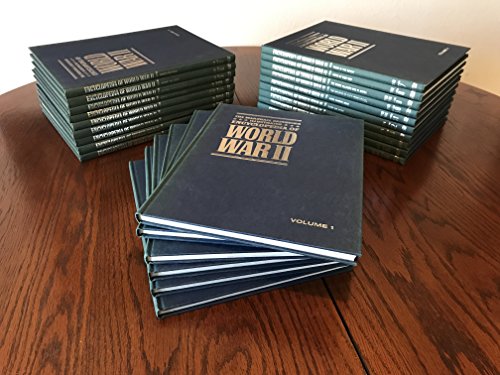
This 25-volume set presents a complete, in-depth encyclopedia spanning all major WW2 topics. Best for: collectors and libraries requiring a full, multi-volume reference. Better for: readers who want exhaustive breadth and a durable, long-term reference library. Caution: the size and volume count may limit practical use for quick lookups or small desks.
Buying Guide
What should I look for in an illustrated WW2 encyclopedia?
Consider scope, image quality, and narrative style. For deep primary-text flavor, select volumes like Volume 1 with original-era writing. For broad coverage and visual variety, multi-volume sets or eyewitness collections work well. If you want equipment detail, prioritize weapon-focused titles.
How does the volume count affect usability?
Single-volume references are quicker for quick lookups but may lack breadth. Multi-volume sets provide comprehensive coverage but require more space and organization. A complete 25-volume set is best for a library with long-term research needs.
Who should choose each option?
- Volume 1 (Stuttman): Best for researchers seeking primary-text roots and historical nuance.
- Eyewitness 1-24: Best for general readers and students needing broad context with strong visuals.
- Weapons encyclopedia (Amber Books): Best for equipment-focused enthusiasts and technical comparison.
- 25-volume Marshall Cavendish set: Best for collectors and libraries seeking an exhaustive reference.
What organization helps with quick comparisons?
Create a quick-reference table with scope, best use case, and potential drawbacks. This helps in side-by-side evaluation when choosing between a single-volume volume and a multi-volume collection.
How should I store and display these works?
Store in a cool, dry place away from direct sunlight. Use shelves with stable support and consider protective covers for long-term preservation. For large sets, plan space and shelving to avoid strain on the bindings.
Are these suitable for academic work?
Yes, particularly volumes with primary-text elements or comprehensive illustrations. Always cross-reference with modern sources for updated context and interpretations in academic work.
How can I verify the best value?
Compare scope, image quality, and pagination against your intended use. If you need broad coverage, a multi-volume set often provides better value per topic. For focused research, a single-volume reference with strong captions may be more efficient.
FAQ
- Q: Are these suitable for homeschooling? A: Yes, with guidance, as visual aids and clear timelines can enhance learning.
- Q: Do these volumes include maps? A: Many illustrated encyclopedias include maps and diagrams; check each product’s features for specifics.
- Q: Is a complete set better than individual volumes? A: It depends on your needs; complete sets offer breadth, while individual volumes suit targeted topics.
- Q: Can these be used as primary sources? A: Some volumes include archival-style text, but they are best supplemented with original documents when possible.
- Q: Are there digital versions available? A: Availability varies by title; check the publisher or retailer for digital formats.