Direct answer: For developers aiming to become proficient in full stack JavaScript, these five books cover frontend, backend, and modern tooling with practical guidance. Each title targets a specific stage of learning—from building scalable apps to hands-on project mastery—so choose based on your current skill and goals. The top picks are best for developers who want clear, actionable guidance and durable concepts you can apply in real projects.
| Book | Author(s) | Format |
|---|---|---|
| Full-Stack React, TypeScript, and Node | David Choi, Cihan Yakar | Paperback |
| The Complete Developer | Martin Krause | Paperback |
| Full-Stack Javascript Projects | Laurence Oliver Jones | Kindle Edition |
| Full Stack Web Development For Beginners | Riaz Ahmed | Paperback |
| Full Stack Web Development | Philip Ackermann | Paperback |
Full-Stack React, TypeScript, and Node

This paperback targets developers building scalable, cloud-ready web applications using modern React, TypeScript, and Docker. Best for readers who want a practical, project-focused path that ties frontend UI, API design, and deployment together. It emphasizes modern tooling and architectural patterns suitable for production-grade apps. A potential limitation is the breadth: readers newer to TypeScript or Docker may need supplemental basics before fully leveraging advanced topics.
The Complete Developer

Best for developers seeking a broad, cohesive path through TypeScript, React, Next.js, MongoDB, and Docker. This paperback is positioned for readers who want an integrated stack guide and to understand how these technologies fit together in modern web apps. The selection favors those who appreciate a structured, multi-technology approach, though readers new to Docker or MongoDB may need to invest time in foundational topics first.
Full-Stack Javascript Projects
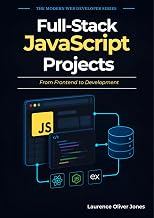
Best for hands-on learners who want to bridge frontend to backend through practical projects. This Kindle edition emphasizes project-based learning and modern JavaScript practices, making it a solid reference as you build real applications. A limitation is the Kindle format, which may affect how you reference code snippets on different devices.
Full Stack Web Development For Beginners

Best for newcomers seeking an approachable, HTML5–PHP oriented path with JavaScript integration. The book’s beginner-friendly tone helps establish fundamentals before diving into more complex JavaScript ecosystems. Better for readers who want a gradual ramp-up rather than a rapid, advanced stack overview.
Full Stack Web Development

Best for readers who want a comprehensive, hands-on guide to building modern websites and applications. This Rhinewerk Computing title emphasizes practical skills and project-oriented learning. A limitation is that some topics may require prior programming experience to fully leverage the depth of coverage.
Buying Guide
What should you consider when choosing a full stack JavaScript book?
- Skill level: Are you a beginner, intermediate, or advanced developer? Pick a book that matches your current knowledge and builds toward more complex topics.
- Scope and focus: Do you want a project-driven path, or a broad reference covering multiple technologies? Choose based on whether you prefer hands-on building or theory-backed structure.
- Technology emphasis: Look for titles that emphasize React, TypeScript, Node.js, Next.js, Docker, MongoDB, or server-side JavaScript based on your goals.
- Format preference: Some learners benefit from paperback for annotated reading; others prefer Kindle for portable access. Consider your note-taking style and device setup.
- Career alignment: If cloud-native deployment or modern tooling is important, prioritize books that discuss Docker, cloud-ready architectures, and deployment pipelines.
How to choose among the options
- For project-driven learning with React and TypeScript, the first book is a strong fit.
- For an integrated stack with Next.js and database tooling, the second book offers a cohesive path.
- For practical, hands-on projects spanning frontend to backend, the third book is ideal.
- For beginners seeking a gentle ramp-up, the fourth book provides approachable foundations.
- For a comprehensive, all-in-one guide, the fifth book covers broad topics with practical guidance.
Comparative at-a-glance
- Best for: Project-led learning with React and TypeScript — Book 1.
- Better for: Integrated full stack with Next.js and Docker — Book 2.
- Choose this if: You want to build multiple complete projects — Book 3.
- Avoid this if: You are a complete beginner seeking foundational HTML/CSS only — Book 4.
- Ideal for: A broad, hands-on full stack reference — Book 5.
FAQ
- Are these books suitable for beginners? Yes, several are designed for beginners, but some assume basic programming knowledge.
- Do they cover Docker and cloud deployment? Some titles include Docker and deployment considerations, others focus on development practices.
- Is TypeScript emphasized? Several titles incorporate TypeScript as a core tool in the stack.
- Which book is best for React beginners? Look for project-focused books that introduce React concepts in clear, hands-on steps.
- Should I read multiple books? For a well-rounded skill set, pairing a project-focused book with a broader full stack reference can be effective.
- Are these books up-to-date with current JavaScript standards? They aim to reflect modern practices, but readers should supplement with online resources for the latest updates.