Finding the right dot-to-dot book for an eight-year-old helps build number sense, handwriting confidence, and focus. This guide highlights five well-suited options, with clear reasons who each book serves best and why you might choose one over another. The selection focuses on age-appropriate difficulty, engaging themes, and the balance between challenge and accessibility for curious 8-year-olds.
Quick Comparison Table
| Product | Best For | Why It Stands Out | Notes |
|---|---|---|---|
| Dot to Dot for Kids Ages 4-8: 100 Fun Connect the Dots Puzzles | Young readers in the 4–8 range, especially late 7s to early 8s | Wide variety of puzzles; simple-to-moderate progressions | Good starter option for younger8s |
| MindWare Dot to Dot Extreme Animals | Older kids who want a bigger challenge | Very high dot counts and intricate pictures | Better for advanced 8-year-olds or those who enjoy detailed art |
| School Zone Connect the Dots Workbook (Preschool to 5) | Younger end of the spectrum or early learners | Simple numbers, strong foundational skills | Great prep for more complex dot-to-dots |
| School Zone Dot-to-Dots Alphabet Workbook | Early letter learners and fans of alphabet themes | Alphabet-based puzzles to reinforce letter recognition | Focuses on letters rather than complex counting |
Below you’ll find detailed product sections organized to help you compare quickly. Each entry notes who the book is best for, why it was selected, and a practical caveat to keep in mind during shopping.
Dot to Dot for Kids Ages 4-8: 100 Fun Puzzles
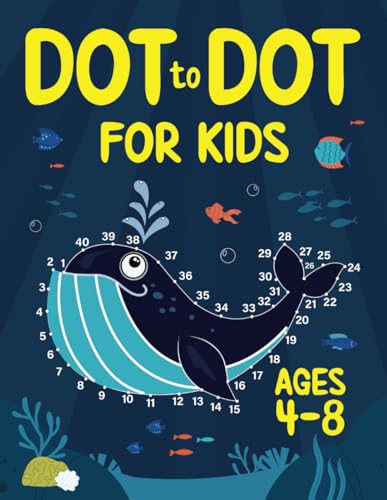
Best for early-to-mid primary students who enjoy a wide mix of dot counts and approachable puzzles. This activity book from Splendid Youth offers 100 connect-the-dots challenges that span easy to moderate difficulty, making it suitable for most 8-year-olds who still enjoy a light stepping stone into more complex dot-to-dot art.
Who it’s best for: an 8-year-old who likes variety and steady progress without overwhelming complexity. Why selected: broad range of puzzles supports gradual skill building and keeps younger readers engaged. Limitation: some pages may feel too easy for strong 8-year-olds seeking deeper challenge.
MindWare Dot to Dot Extreme Animals

Best for older kids who crave higher complexity. MindWare’s Extreme Animals features very high dot counts (ranging from hundreds to over a thousand) that reveal detailed animal pictures as the dots connect. It also doubles as a coloring book, offering a finished piece to display after completion.
Who it’s best for: an eight-year-old ready for a substantial challenge and imaginative animal themes. Why selected: the extensive dot counts and artistic payoff provide a rewarding sense of accomplishment. Caution: the large dot counts can be time-consuming and may require longer focus sessions for some children.
School Zone Connect the Dots Workbook

Best for beginners focusing on foundational skills. This workbook is designed for preschool to early kindergarten—great for transitional learners who are building confidence with counting and simple dot-to-dot sequences before moving to more complex designs.
Who it’s best for: younger readers or mixed-age households where some children are just starting with dot-to-dot. Why selected: straightforward progression supports steady skill-building. Limitation: it may be too simple for a confident eight-year-old seeking more challenge.
School Zone Dot-to-Dots Alphabet Workbook

Best for alphabet-focused practice and early literacy support. This workbook emphasizes letter recognition through dot-to-dot activity, making it a strong choice for 4–6-year-olds or kids beginning to blend letters with shapes before advancing to number-based dots.
Who it’s best for: children building early literacy and letter-skill confidence. Why selected: a practical way to blend fine motor and phonics with interactive puzzles. Caution: less emphasis on number sequencing, which may be a drawback for strictly counting-focused learners.
Buying Guide: Dot-to-Dot Books For Eight-Year-Olds
What should I look for in difficulty level?
Choose a book that matches your child’s current counting fluency and number sense. For eight-year-olds ready for more challenge, look for thousands of dots or intricate designs. If your child prefers quick pages, mid-range dot counts provide satisfying progress without fatigue.
Which themes engage most at this age?
Puzzles featuring animals, vehicles, or fantasy scenes tend to sustain interest. Animal-heavy designs can motivate careful observation and coloring after the dots are connected, turning a puzzle into a finished artwork.
Should the book double as a coloring activity?
Books that transform into coloring pages offer a dual activity: logical completion followed by creative expression. This can be especially helpful for kids who enjoy drawing as a post-puzzle activity.
Is portability important?
For commutes or travel, consider books with spiral bindings or compact page counts. A portable option supports short, frequent practice sessions in small time windows.
What about pacing and progression?
Programs with a gradual increase in dot counts help sustain motivation. A mix of easier and harder puzzles within a single book can balance confidence and challenge across sessions.
Accessibility considerations
Clear lines, bold dots, and legible numbers aid younger readers. If your child is sensitive to fine motor demands, look for designs with larger gaps between dots to reduce frustration.
Practical tips for use
- Set short daily goals (e.g., five connected dots) to maintain consistency without fatigue.
- Provide a wide-tipped pencil or colored pencils to encourage neat connections and coloring after completion.
- Use a ruler for tracing if your child prefers a guided start on the first few pages.
FAQ
- Q: Are dot-to-dot books suitable for an eight-year-old who struggles with counting? A: Look for titles with simpler sequences and more visual prompts to build confidence before progressing to higher counts.
- Q: Can dot-to-dot activities improve handwriting? A: Yes, by reinforcing fine motor control and spatial awareness that transfer to writing.
- Q: Should I choose a coloring-capable book or a pure connect-the-dots book? A: A coloring-capable book can offer a satisfying transition from puzzle completion to display-ready art.
- Q: How many dots are appropriate for an eight-year-old? A: It varies by child, but a gradual increase from a few hundred to over a thousand dots provides a meaningful challenge without overwhelming.
- Q: Is it okay to rotate between different themes? A: Yes, switching topics—animals, letters, and everyday objects—helps maintain interest and broadens engagement.
- Q: Can these books support classroom use? A: They can, especially for literacy warm-ups, quiet time, or independent math warm-ups during math centers.