Yes—middle schoolers can gain valuable career-readiness skills from structured books that blend practical activities with foundational subjects. The best picks nurture critical thinking, science literacy, organization, and personal development. This guide highlights five top titles that suit different learning styles: hands-on investigators, biology explorers, organized planners, life-skills mental health, and financial literacy. Whether a student loves solving mysteries, studying living systems, keeping neat classroom records, or planning for the future, these books offer clear, actionable activities for homeschool or classroom use.
| Product | Best For | What It Teaches |
|---|---|---|
| Mark Twain Forensic Investigations Workbook | Investigative thinkers and aspiring scientists | Deductive reasoning, crime-scene analysis, handwriting and fingerprinting basics |
| Carson Dellosa The 100 Series: Biology Workbook | Science-literate students and biology fans | Biology vocabulary, core concepts in matter, cells, genetics, and laboratory-style study |
| Whaley Three Line Attendance & Grade Book | Organized planners and classroom record-keepers | Attendance, grades, and progress tracking in a single, easy-to-use format |
| Mark Twain Life Skills Mental Health Workbook for Kids | Wellness-minded learners and future planners | Healthy lifestyle choices, financial literacy, stress and anxiety management |
Mark Twain Forensic Investigations Workbook

Best for curious junior detectives who enjoy puzzle-like challenges. The book develops unmatched deductive-reasoning skills as students act as crime-solving stars. Most scenarios support multiple plausible outcomes, encouraging flexible thinking and evidence interpretation. Activities include interpretive handwriting, body language observation, fingerprinting, and other investigative tasks. This makes it a strong pick for students who thrive on hands-on learning and teamwork, whether in homeschool or classroom settings. A caution: some scenarios may require basic art supplies or simple lab gear for handwriting and fingerprint activities.
Carson Dellosa The 100 Series: Biology Workbook
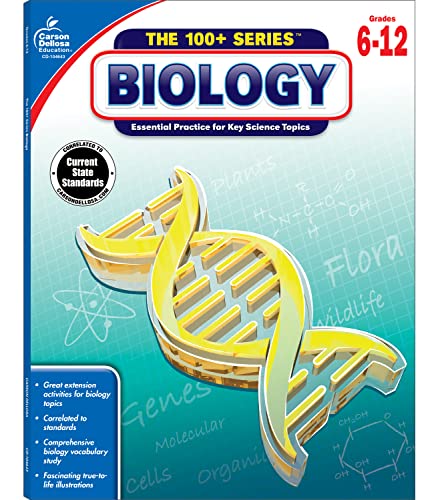
Best for students who want a solid biology boost with clear standards alignment. This workbook provides great extension activities in science and biology, with comprehensive vocabulary study that supports test readiness and classroom discussions. It’s well-suited for learners who prefer structured practice and want to build a strong science foundation across topics like matter, atoms, cells, and genetics. A limitation to consider: the workbook is best used with guidance to connect vocabulary with real-world experiments.
Whaley Three Line Attendance & Grade Book

Best for teachers and students who value organization. This comprehensive gradebook and attendance system tracks grades, attendance, assignments, test scores, and student progress in one place. It supports recording by class period, with space for up to 20 students per class and detailed notes. The large format and clear layout help ensure accuracy and ease of reporting. A potential limitation is the fixed layout; schools with more periods or larger classes may need additional record-keeping solutions.
Mark Twain Life Skills Mental Health Workbook for Kids

Best for learners who want practical life skills and financial literacy alongside mental health awareness. The workbook guides students toward healthy physical and financial lifestyles. It includes updated sections on work ethic, nutrition, and exercise, plus new material on preparing financially for the future. The included graphic organizers, self-assessments, and real-life scenarios support independent work and reflection. A caveat: topics related to health and finances may require adult discussion to ensure age-appropriate framing.
Buying Guide: Key Purchase Considerations
What should you look for when selecting middle school career books?
- Curriculum alignment: Choose titles that align with current standards or district expectations to ease classroom integration.
- Learning style compatibility: Prefer a mix of activities—hands-on labs, reading, and writing prompts—to engage different learners.
- Age appropriateness: Ensure content is suitable for grades 6–8, with clear explanations and accessible language.
- Skill diversity: Include resources for critical thinking, organization, wellness, and science literacy to cover multiple career-readiness areas.
- Supplemental materials: Look for workbooks with vocabulary support, graphic organizers, and answer keys or teacher guides for easy classroom adoption.
Structured progress and assessment
Consider how the book helps track growth. Works with clear learning objectives and structured activities enable both independent work and guided lessons. Tools like rubrics, checklists, and self-assessments help students monitor improvement over time.
Accessibility and inclusivity
Incorporate resources that accommodate different learners, including visual supports, straightforward instructions, and opportunities for collaborative projects. A balanced mix of solo and group activities tends to broaden engagement and build essential teamwork skills.
Format and durability
For classroom use, a durable, teacher-friendly format matters. Large formats with legible layouts, clear headings, and sections that support quick reference save time during lessons and grading.
FAQ
- What age group are these books best suited for? They target middle school students, typically grades 6–8, with content level and activities appropriate for that age range.
- Can these books be used in both homeschool and classroom settings? Yes. Each title offers activities and guidance suitable for independent study or teacher-led lessons.
- Do the books include hands-on or lab activities? Several titles include practical activities such as handwriting analysis, fingerprinting, and biology exercises to promote experiential learning.
- Are these books aligned with standards? Some titles are described as correlated to standards, which helps with integration into established curricula.
- Is there guidance for evaluating student progress? Many products offer structured activities and progress-tracking features, though you may need additional assessment tools for formal reporting.
- What if a topic feels too advanced? Look for titles that include vocabulary support and tiered activities, and pair them with teacher guidance or collaborative group work to scaffold learning.