Answer: For beginners and advancing musicians, the right basic music theory book builds a clear vocabulary, practical understanding, and steady progress. This guide highlights five strong options, showing who each is best for and why it stands out. Use these picks to map out a practical study path—from foundational staff notation to harmony and ear training. The selections below are suitable for students, teachers, and self-learners seeking structured lessons and exercises.
| Product | Best For | What It Covers |
|---|---|---|
| Alfred’s Essentials of Music Theory, Complete | All ages, self-study, practice with ear training | Language of music, lessons, and exercises |
| Alfred’s Essentials of Music Theory, Bk 1 | New students, foundational concepts | Staff, notes, clefs, time signatures, note values, dynamics, steps |
| Alfred’s Basic Piano Library Theory, Bk 1A | Piano students, page-by-page coordination | Coordinate with lesson books, games, quizzes, off-keyboard practice |
| Hal Leonard Pocket Music Theory | Travel-ready reference for a broad audience | Harmony, scales, chords, key signatures, quick reference |
Alfred’s Essentials of Music Theory, Complete

Product overview: This comprehensive package is designed for learners of any age who want a structured path through music theory. It combines lessons, ear training, and workbook exercises to reinforce concepts and improve listening skills. The inclusion of an ear-training component makes it well-suited for students who want to connect written theory with aural understanding.
Best for: Students seeking an all-in-one bundle that blends notation, theory, and listening exercises in a single course. Suitable for self-study, private lessons, or classroom use where a complete curriculum is helpful.
Why selected: It offers a broad, cohesive framework, ensuring users progress from basic terms to more advanced relationships in harmony and rhythm. The integrated practice helps with retention and application.
Caution: The complete set may be more than needed for casual learners; consider starting with a focused volume if time is limited.
Alfred’s Essentials of Music Theory, Bk 1
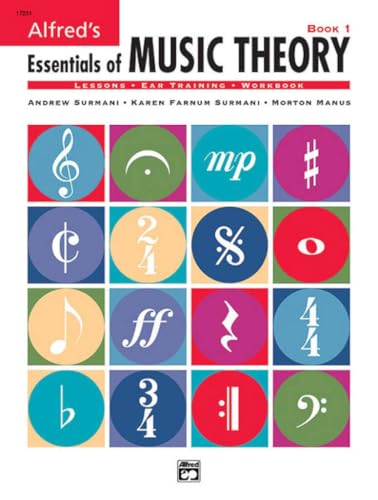
Product overview: A foundational course designed for learners of all ages who want a solid grasp of the language of music. It covers staff, notes, pitches, clefs, time signatures, note values, dynamics, flats, sharps, and whole and half steps across 25 concise lessons. It blends reading and writing with ear-training support and unit reviews to reinforce learning.
Best for: Beginners who need a well-structured, approachable entry into music theory with clear lesson progression and practical exercises.
Why selected: Its concise lesson format and integration of theory with practical reading/writing tasks help learners build confidence quickly. The program is adaptable to both self-study and classroom use.
Caution: Ear-training components are listed as separate (CDs sold separately); ensure you have access to the listening materials if you want full practice.
Alfred’s Basic Piano Library Theory, Bk 1A

Product overview: This workbook is designed to coordinate page-by-page with related piano lesson books. It includes games and quizzes to reinforce understanding and provides off-keyboard activities that help students practice what they learn away from the keyboard.
Best for: Piano students who want theory practice that aligns with their lesson progress and enjoy interactive activities beyond page-by-page drills.
Why selected: The pairing with piano lessons makes it a practical choice for ongoing theory reinforcement in a familiar context, reinforcing memory through varied activities.
Caution: Designed to complement, not replace, primary piano instruction. Users should rely on the main lesson books for comprehensive theory coverage.
Hal Leonard Pocket Music Theory

Product overview: A compact, comprehensive guide designed for convenient reference. It covers harmony, scales, chords, and key signatures with a practical approach for both beginners and more experienced players expanding their theory knowledge.
Best for: Musicians who want a portable, quick-reference resource to support ongoing theory study and on-the-go reference.
Why selected: Its concise format makes it easy to pull out for quick refreshers during practice or study sessions, offering essential theory without overwhelming details.
Caution: It is a reference guide rather than a full course; for deep learning, pair it with a more structured workbook or lessons.
Buying Guide: Key Considerations For Choosing Basic Music Theory Books
What level should you start at? Beginners should look for clear, structured introductions (Bk 1 or 1A). If you want an all-in-one course, choose bundles that pair theory with ear training and writing exercises. For musicians who travel or study on the go, a compact pocket reference can complement a fuller course.
Is ear training included? Some titles include listening exercises or separate CDs. If ear training is important, verify how it’s delivered (CDs, online resources, or integrated exercises).
Does the book align with your instrument? Piano-focused books pair well with keyboard instruction, while general theory books suit any instrument. Consider a book that syncs with your current lessons to reinforce daily practice.
How will you study? If you prefer interactive learning, look for books with games, quizzes, and solution sections. For solitary study, ensure the structure clearly shows lesson progression and review checks.
What is the long-term goal? If you aim for solid fundamentals, a complete theory course is valuable. If you just need quick reference, a pocket guide can suffice and complement a fuller curriculum.
Frequently Asked Questions
- What is the easiest basic music theory book to start with? A beginner-friendly option like Alfred’s Essentials of Music Theory, Bk 1, provides a clear foundation with essential concepts and exercises.
- Should I choose a bundle with ear training? Yes, if you want to connect notation with listening skills, a bundle that includes ear training helps with practical retention.
- Is a piano-focused theory book better for absolute beginners? It can be advantageous if you are learning piano, as it reinforces theory alongside practical keyboard applications, but general theory works for all instruments too.
- Do these books require CDs or online resources? Some editions include CDs or mention separate audio components; verify availability when purchasing if you rely on audio practice.
- Can I use one book for both self-study and classroom use? Yes, many of these titles are designed for classroom settings or independent study, but alignment with your curriculum improves consistency.
- Is a pocket guide enough for advanced players? A pocket guide is helpful as a supplementary reference, but advanced players typically benefit from a full theory course to deepen understanding.