If you’re learning guitar and want to master theory quickly, these carefully chosen resources cover chords, scales, harmony, and ear training. They’re best suited for beginners who want a solid foundation and intermediate players seeking practical theory for composition and improvisation. The top five options provide structured lessons, vocal music theory concepts, and method-backed approaches from reputable publishers.
| Product | Best For |
|---|---|
| Essential Elements for Guitar Book 1 | Absolute beginners who need step-by-step lessons with chords and TAB |
| Music Theory – Hal Leonard Guitar Method by Tom Kolb | Beginners to intermediate players who want a guided theory path with audio |
| Essential Concepts: Harmony & Theory | Students seeking step-by-step concepts for harmony and scales |
| Alfred’s Essentials of Music Theory: Complete | Comprehensive theory coverage with a practical guitar focus |
| Creative Guitar 1: Cutting-Edge Techniques | Guitarists who want theory applied to improvisation and rock/modern styles |
| A Modern Method for Guitar – Volume 1 | New learners who want a Berklee-style approach to chords, scales, and song learning |
Essential Elements for Guitar Book 1

Best for beginners who want a complete method with chords, TAB, and music theory integrated into easy songs. The book includes 64 songs and cross-curricular activities, making it ideal for classroom settings or self-teaching learners who need structured progression. The included theory, chords, and notes help new players connect theory to real guitar playing. A potential limitation is that some learners may outgrow the method as they advance beyond basic pop and rock songs.
Music Theory – Hal Leonard Guitar Method by Tom Kolb

This is a beginner-to-intermediate guide focused on practical theory for guitar. It emphasizes scales, chords, modes, and ear training, with 94 audio tracks to aid listening and internalization. Choose this if you want a structured audio-enhanced path and explicit theory concepts tied to guitar playing. The approach may be less suitable for players who prefer a purely written theory without audio reference.
Essential Concepts: Harmony & Theory

Best for students who want a multi-instrument oriented, step-by-step concept guide. The book emphasizes harmony and theory with clear progression and practical applications for guitar, though it also targets other instruments. The stated scope includes intervals and scales, making it a strong foundation resource. A limitation is tension between multi-instrument breadth and guitar-specific examples for some learners.
Alfred’s Essentials of Music Theory: Complete

Best for a comprehensive, publisher-backed approach to music theory that includes guitar relevance. The complete volume blends theory topics with practical exercises and examples. It is well-suited for learners seeking a solid theoretical background and structured practice. The potential drawback is the depth of content, which may be more than some beginners require initially.
Creative Guitar 1: Cutting-Edge Techniques
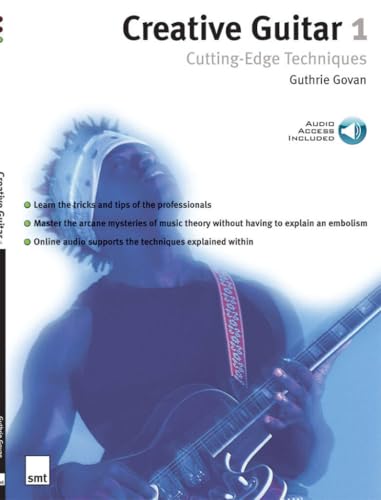
Best for players who want theory applied to improvisation and modern styles. The book includes pentatonic patterns, arpeggios, and backing tracks, linking theory to practical playing. It’s particularly helpful for rock and fusion enthusiasts. A limitation is that it focuses more on technique and patterns than broad theoretical foundations, which may require supplementing with a theory-only resource.
A Modern Method for Guitar – Volume 1

Best for beginners seeking a Berklee-style approach to chords, scales, and song learning. This method blends music theory with practical guitar technique in a song-centered format. It’s a strong choice for learners who prefer structured progression and musical excerpts to guide theory study. The limitation is that some sections may assume a basic musical literacy that not all beginners have yet.
Buying Guide
What should you look for when choosing guitar-focused music theory books?
- Learning style alignment: Do you prefer step-by-step lessons, audio tracks, or hands-on song-based practice?
- Scope and depth: Do you need a quick foundational guide or a comprehensive theory study?
- Guitar-specific examples: Are the exercises clearly tied to guitar technique and fretboard application?
- Supplementary materials: Are audio tracks, play-along tracks, or chord charts included?
- Course alignment: Is the book compatible with your current level (beginner, intermediate) and goals (improvisation, theory exams, pedagogy)?
FAQ
- What is the best starting point for complete beginners?
Answer: A beginner-friendly method that combines chords, TAB, and basic theory, such as Essential Elements for Guitar Book 1, helps establish a solid foundation fast. - Should I use audio tracks along with theory text?
Answer: Yes. Audio tracks reinforce ear training and help you hear scales, chords, and progressions in real time, improving retention. - Is a multi-instrument approach useful for guitar players?
Answer: It can be beneficial for understanding intervals and harmony, but focus on guitar-specific examples to maximize practical fretboard application. - Can these books replace a teacher?
Answer: They can substitute for structured self-study, but teachers can tailor explanations to your unique needs and correct mistakes. - Which book combines theory with improvisation best?
Answer: Creative Guitar 1 offers practical application through patterns and backing tracks, useful for improvisation-focused players. - Do these resources cover ear training sufficiently?
Answer: Some do, particularly Hal Leonard Kolb’s method, which includes audio components for developing listening skills.